INTRODUCTION
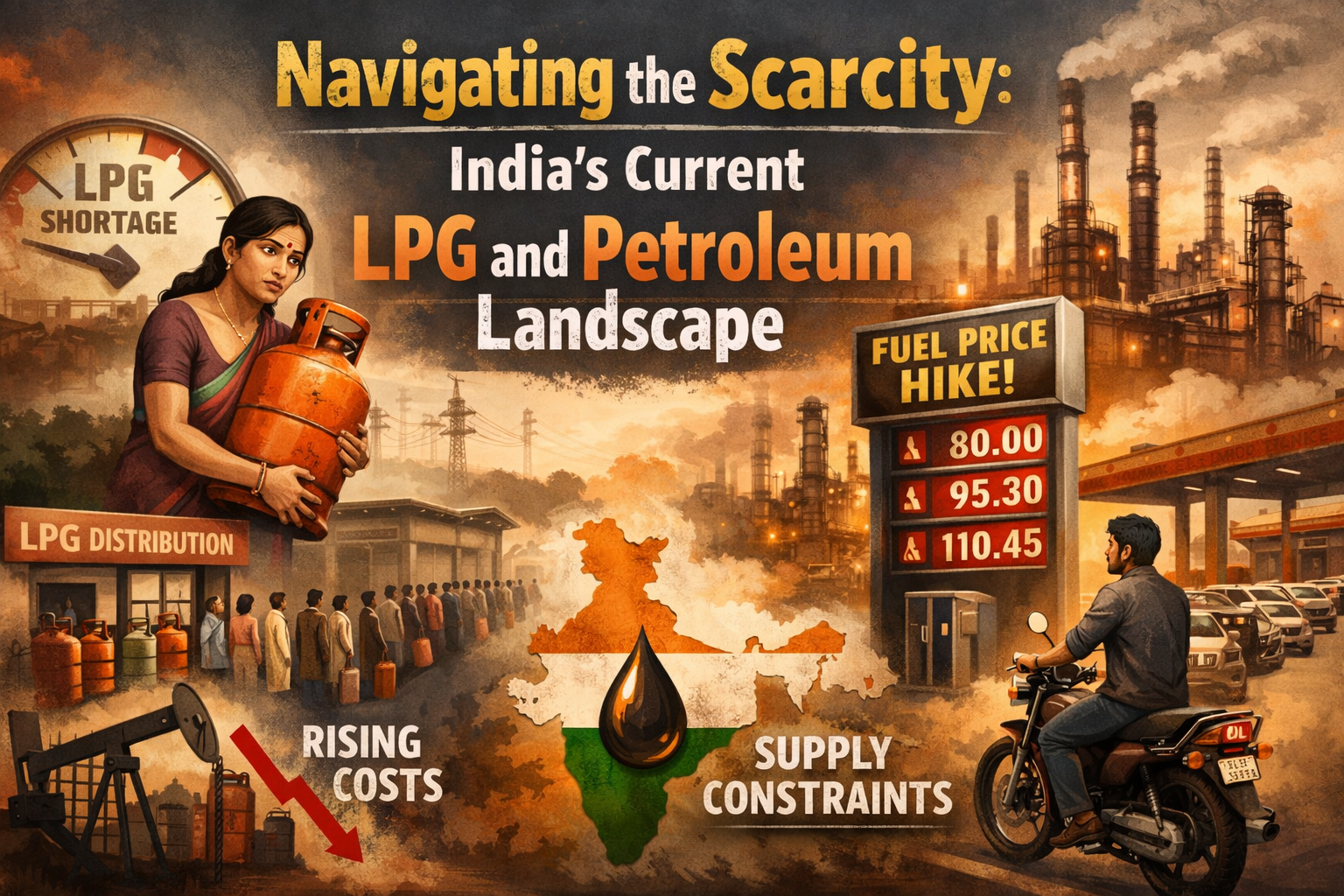
India, a rapidly developing nation with a burgeoning economy, relies heavily on conventional energy sources to power its industries, transportation, and households. Liquefied Petroleum Gas (LPG) and petroleum products, particularly petrol and diesel, are indispensable commodities. However, recent periods have seen India grappling with complex challenges concerning the supply and pricing of these crucial fuels. Understanding the current scenario requires an examination of global dynamics, domestic demand, and policy interventions.
THE LPG SUPPLY CHALLENGE IN INDIA
The availability of LPG, primarily used as a domestic cooking fuel, is a critical component of household well-being and energy access in India. The nation is a significant importer of LPG, making it highly susceptible to international market fluctuations. The current scenario is characterized by a confluence of factors contributing to supply pressures and price volatility.
Firstly, global crude oil and gas prices have experienced unprecedented surges in recent years, driven by geopolitical tensions, particularly the conflict in Eastern Europe, and resurgent post-pandemic demand. Since LPG prices are linked to international benchmarks like Saudi CP (Contract Price), higher global prices directly translate to increased import costs for India.
Secondly, the Indian government's subsidy mechanism for domestic LPG cylinders has undergone various adjustments. While subsidies aim to cushion consumers from price shocks, the substantial increase in international prices has often outstripped the government's capacity to fully absorb the difference, leading to higher retail prices for consumers. This creates a perceived shortage as affordability becomes a barrier for some segments of the population, even if physical supply exists.
Thirdly, logistical challenges and infrastructure limitations, though improving, can sometimes create localized distribution bottlenecks. While the overall supply chain is robust, ensuring last-mile delivery to remote areas, especially during peak demand or unexpected disruptions, remains an ongoing operational priority for oil marketing companies.
THE PETROLEUM LANDSCAPE: UNDERSTANDING THE GAPS
India is the world's third-largest consumer of crude oil, importing over 85 percent of its requirements. This heavy reliance makes the country exceptionally vulnerable to global crude price swings and supply disruptions. The current petroleum scenario reflects a similar set of challenges to LPG, albeit with distinct implications for the economy and daily life.
The primary driver of stress in the petroleum sector is the persistently high international crude oil prices. Global demand recovery, coupled with supply constraints from major oil-producing nations and geopolitical uncertainties, has kept Brent crude futures elevated. This directly impacts the import bill for India and dictates the base price for refined products like petrol and diesel.
Furthermore, the depreciation of the Indian Rupee against the US Dollar exacerbates the situation. Since crude oil is traded in US Dollars, a weaker Rupee means India has to pay more in local currency for the same quantity of oil, further inflating import costs.
While India possesses significant refining capacity, the economics of crude procurement and the final retail pricing are heavily influenced by government excise duties and state-level value-added taxes (VAT). These taxes constitute a substantial portion of the retail price, and while they are crucial for government revenue, they also contribute to higher fuel costs for consumers and businesses. Any "shortage" felt by the public is often more a function of affordability and price rather than an absolute lack of physical fuel at retail outlets, although localized logistical issues can occasionally occur.
DRIVING FACTORS BEHIND THE SHORTAGE
Several overarching factors underpin the current energy scenario in India:
- Global Commodity Price Inflation: A worldwide phenomenon impacting all energy-importing nations.
- Geopolitical Instability: Conflicts and sanctions disrupting traditional supply routes and market stability.
- Robust Domestic Demand: India's growing economy and expanding population continue to drive up energy consumption.
- Currency Depreciation: The weakening of the Indian Rupee against the US Dollar increases import costs.
- OPEC+ Policies: Decisions by the Organization of the Petroleum Exporting Countries and its allies on production quotas significantly influence global supply.
GOVERNMENT INTERVENTIONS AND MITIGATION STRATEGIES
The Indian government has been actively pursuing various strategies to mitigate the impact of the global energy crisis. These include:
- Diversification of Supply Sources: India is actively seeking to diversify its crude oil import basket, exploring new suppliers to reduce reliance on any single region.
- Strategic Petroleum Reserves: The nation maintains strategic petroleum reserves to provide a cushion against short-term supply disruptions.
- Tax Adjustments: Governments, both central and state, have occasionally adjusted excise duties and VAT on fuels to provide some relief to consumers, though these measures are often balanced against revenue requirements.
- Promotion of Alternative Fuels: Significant emphasis is being placed on accelerating the adoption of electric vehicles (EVs), promoting biofuels (ethanol blending), and expanding the natural gas infrastructure to reduce dependence on crude oil.
- Diplomacy: Engaging in bilateral and multilateral discussions with oil-producing nations to ensure stable and affordable supply.
- Direct Benefit Transfer for LPG: Continuing the targeted subsidy mechanism for LPG, ensuring that financial assistance reaches eligible households.
THE ROAD AHEAD: SUSTAINABLE ENERGY SECURITY
Achieving sustainable energy security for India is a multi-faceted challenge requiring both short-term tactical responses and long-term strategic initiatives. Beyond navigating the immediate price and supply pressures, the focus remains on enhancing domestic exploration and production, investing in renewable energy sources like solar and wind power, and improving energy efficiency across all sectors. The transition to a greener energy future, while ambitious, is seen as the ultimate solution to insulating India from the volatility of international fossil fuel markets.
CONCLUSION
The current scenario of LPG and petroleum supply in India is a complex interplay of global economic forces, geopolitical realities, and domestic policy choices. While physical shortages at the pumps are generally rare due to robust supply chains and strategic planning, the 'shortage' is often experienced through elevated prices, which impact household budgets and industrial operational costs. India's journey towards energy self-reliance and a diversified, cleaner energy mix is critical for its economic stability and environmental sustainability in the decades to come.
 Legal Narrative